Global Collaboration on H5N8 and Related Influenza Viruses
Advancing Understanding of H5 Antigenic Evolution Through Cartography
In recognition of the rapid genetic and antigenic evolution of highly pathogenic avian influenza viruses of the H5 subtype, researchers from the University of Cambridge, the University of Wisconsin at Madison, and Erasmus Medical Center Rotterdam examined global patterns of antigenic chance across A(H5) viruses.
Using genome sequence data shared through the GISAID Initiative, the researchers performed a comprehensive analysis of the antigenic evolution of A(H5) influenza viruses using antigenic cartography, a tool that enables visualization and quantification of antigenic changes over time.

In their study titled “A vaccine central in A(H5) influenza antigenic space confers broad immunity” Nature (2025) DOI: 10.1038/s41586-025-09626-3, the researchers introduce a new approach to designing vaccine antigens that provide broad protection, based on antigenic phenotype rather than genetic sequence alone. Using an antigenic map as a guide, researchers engineered synthetic HA constructs positioned centrally within the antigenic space, resulting in vaccine candidates that elicited broader and more robust antibody responses in animal models. Their strategy offers a promising step toward the development of broadly protective or universal A(H5) influenza vaccines.
The antigenic map produced through this collaboration serves as a valuable resource to track emerging A(H5) antigenic variants and to evaluate the breadth of vaccine coverage. By informing vaccine strain selection and identifying central antigenic targets, this work enhances the global effort to prepare for potential influenza pandemics. The approach demonstrated by the study may be extended to other zoonotic influenza subtypes, contributing to global influenza preparedness through data sharing, collaboration, and open-access scientific resources.
All antigenic maps are publicly accessible and reagents are available to contributing laboratories, reinforcing the benefits from responsible data sharing, with fair attribution toward equitable global preparedness and response against emerging H5 threats.
Genome sequence data and acknowledgements are accessible via GISAID EPI_SET_240709be and doi.org/10.55876/gis8.240709be
Report of 2017
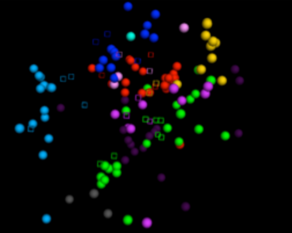
In recognition of the rapid genetic and antigenic evolution of highly pathogenic avian influenza viruses of the H5 subtype, investigators from the University of Cambridge, the University of Wisconsin at Madison, and Erasmus Medical Center in Rotterdam are studying antigenic change of H5 viruses globally.
To this end, the consortium periodically makes use of genome sequence data shared through the GISAID Initiative, to generate synthetic hemagglutinin constructs to produce recombinant H5 viruses and H5-specific ferret antisera. Antigenic characterization is then performed with the hemagglutination inhibition assay and the resulting data is used to build so called 'antigenic maps' to represent all H5 viruses that have circulated from 1959 to the present day, providing critical information to stakeholders around the globe, for example for the design of vaccines for humans or poultry.
The antigenic maps will be published with open access to the public. The synthetic hemagglutinin constructs, reverse genetics viruses and antisera will be shared with the laboratories that contributed the genome sequence data to GISAID. Reagents may also be provided to other researchers, including National Influenza Centers and global reference laboratories, upon assurance that the originating laboratory, where the clinical specimen or virus isolate was first obtained, and the submitting laboratory, where sequence data have been generated and submitted through the GISAID mechanism, are fully recognized, to ensure fair attribution of contributions to the results benefitting from the data.
The investigators wish to thank the governments and scientists of Cambodia, China, Egypt, Ghana, Indonesia, Nepal, Russia, Vietnam for their contributions that made this research possible.
For further information please visit:
Centre for Pathogen Evolution at the University of Cambridge
Molecular Virology and Virus Evolution at the Erasmus Medical Center in Rotterdam
School of Veterinary Medicine at the University of Wisconsin at Madison

