In Focus
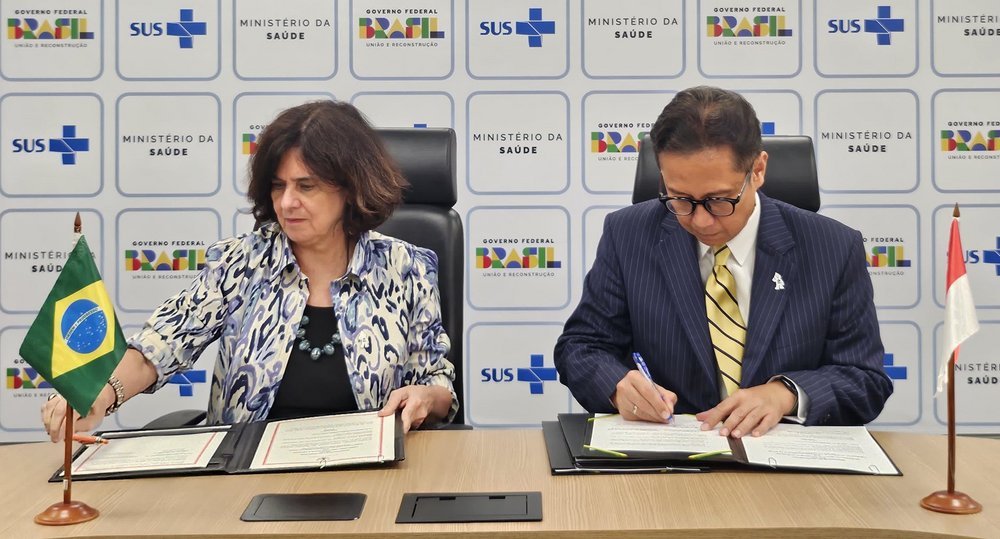 Brazil and Indonesia conclude the first Arbovirus Summit
(Bali) Indonesia's Minister of Health, Budi Gunadi Sadikin and Brazil's Minister of Health, Dr. Nísia Trindade Lima convened a two-day summit to gather policy makers, experts in global health and leading researchers of arboviruses, to respond to the significant increase in cases of Dengue virus infections across South America and Southeast Asia. The Arbovirus Summit discussed the urgent need to strengthen integrated arbovirus surveillance and management.
Held at the recently inaugurated GISAID Academy 22-23 April 2024, the Summit showcased innovations in vector control strategies, breakthroughs in antivirals and vaccine development and explore the implementation of global genomic surveillance of arbovirus as a tool for monitoring the effectiveness of intervention strategies as well as viral spread and evolution.
Recommended composition of influenza virus vaccines for use in the 2024-2025 Northern Hemisphere Influenza Season announced
(Montreux) An advisory group of experts taking part in a meeting organized by the WHO Global Influenza Programme between 19-22 February 2024 analyzed influenza virus surveillance data generated by the Global Influenza Surveillance and Response System (GISRS) and issued on 23 February 2024, recommendations on the composition of the influenza vaccines for the following influenza season.
These recommendations are used by the national vaccine regulatory agencies and the pharmaceutical companies to develop, produce and license influenza vaccines.
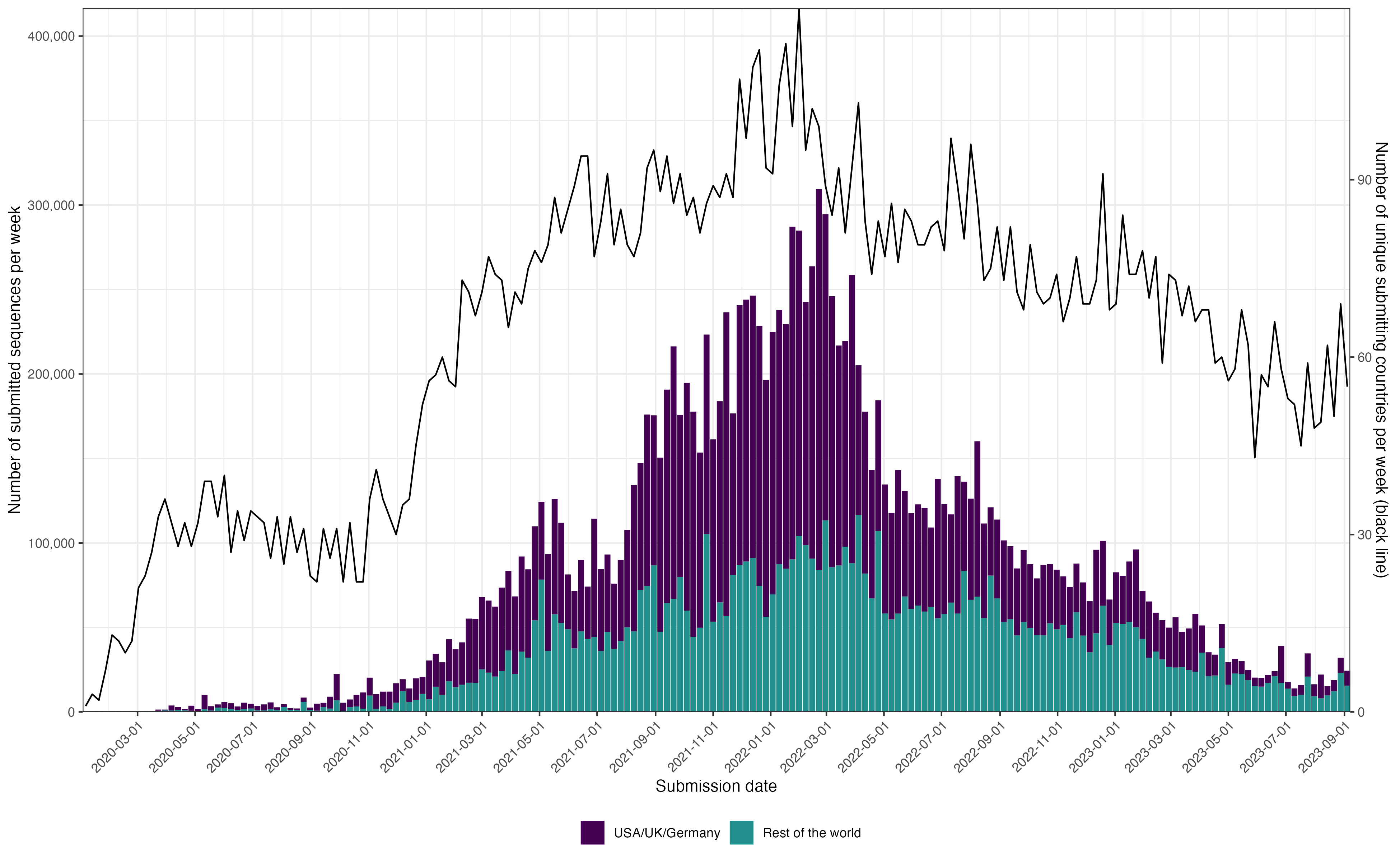
16 million hCoV-19 sequences shared: Where do surveillance efforts stand?
After mixed efforts in 2020, followed by a massive explosion of Omicron data generated by late 2021 from 215 countries and territories, the number of unique submitting countries, and hence, representativeness of global surveillance, today remains at early 2021 levels, and well above 2020 levels.
While the US, UK, and Germany contributed an outsized share in 2022, it is worth pointing out that increasing representation of diverse regions over time, and the timeliness of submissions are far more critical to ensure new variants are detected in real-time. The recent timely discovery of BA.2.86 and EG.5.1 are examples of continued effectiveness so far.

H5N1 continues to impact global bird populations
A clade of highly pathogenic avian influenza (HPAI) viruses, originating from poultry but subsequently identified in migratory birds, is severely impacting wild bird populations, including endangered bird species. Over 100 million birds have been killed across the globe, making this the largest outbreak in poultry in history. The current H5N1 clade 2.3.4.4b is also affecting South America where several countries have recorded their first ever cases.
Events with mammal-to-mammal transmission have been reported, including in farmed mink and in marine mammals. Although HPAI H5N1 can cause serious disease in humans, no known human-to-human spread has been identified. GISAID is closely working with its partners to help facilitate the timely sharing of the latest genomic data.
> for more, see statements by WHO Global Influenza Programme and WOAH
GISAID joins the G20 Joint Finance & Health Ministerial Meeting
Yogyakarta, 20-21 June. Under the motto ‘Strengthening Global Health Architecture’ a delegation from GISAID attended the G20 Finance and Health Ministers meeting hosted by Indonesia, to discuss with G20 Member States’ and its partners their vision for GISAID+ (GISAID plus).
Global leaders reflected on the need to coordinate and strengthen resources during future pandemics. In particular Member States stressed the essential role GISAID plays in global health security, and discussed how global leaders could support GISAID’s expansion as a global resource to respond to other priority pathogens with major impact and pandemic-potential.
CBD Study finds 'GISAID might provide useful lessons and insight to ABS discussions'
A peer-reviewed fact-finding and scoping study on digital sequence information on genetic resources in the context of the Convention on Biological Diversity and the Nagoya Protocol, highlights key advantages of GISAID’s sharing mechanism and a fair and equitable benefit-sharing resulting from access to data.
With the core principals of timely international sharing of health data for protecting populations against lethal infectious disease outbreaks and adherence to scientific etiquette of acknowledgement of the source of data has resulted in global trust and confidence in GISAID.
Public-Private Partnerships of the GISAID Initiative

The GISAID Initiative involves public-private partnerships, among them the partnership with the Federal Republic of Germany, and governmental public-health and academic institutions in Argentina, Brazil, China, Republic of the Congo, Ethiopia, Indonesia, Malaysia, Russia, Senegal, Singapore, South Africa, and the support by Friends of GISAID, a registered non-profit association and administrative arm of the Initiative.

GISAID Resources

Data Acknowledgement Locator